Geodesy—the science of measuring Earth’s shape, gravity field, rotation, and surface deformation—relies heavily on advanced software. From processing satellite signals to modeling tectonic plate motion, modern geodetic research would be impossible without specialized computational tools. Below is an overview of the key software platforms that power today’s geodesy labs.
GNSS Data Processing
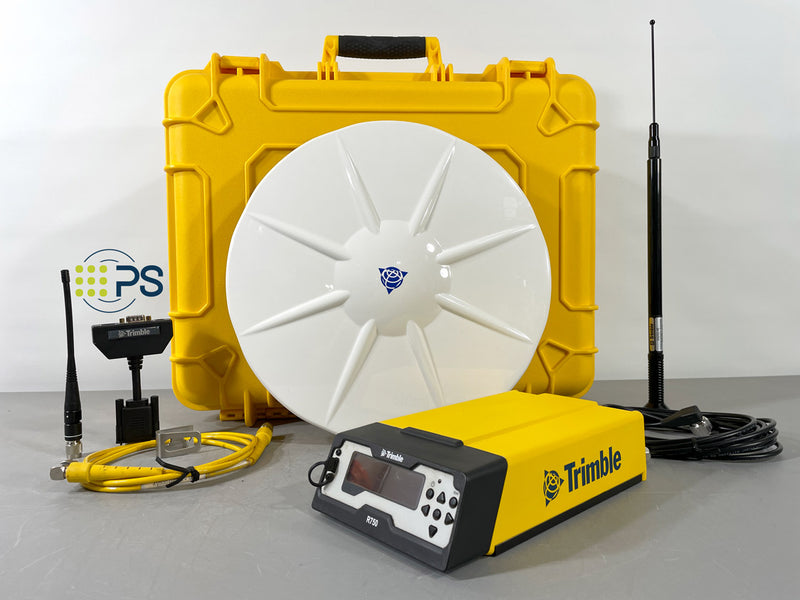
Global Navigation Satellite Systems (GNSS), including GPS, are foundational to geodesy. Processing raw satellite observations into precise position estimates requires high-precision software.
One of the most widely used packages is GAMIT/GLOBK, developed at MIT. It processes GNSS observations to estimate station positions, velocities, and atmospheric delays. Similarly, Bernese GNSS Software—developed at the University of Bern—is known for its rigorous modeling capabilities and is widely used in global reference frame studies.
Another popular platform is GIPSY-X, created by NASA’s Jet Propulsion Laboratory. It is optimized for precise point positioning (PPP) and high-accuracy orbit determination.
These tools allow researchers to detect millimeter-scale crustal movements—critical for studying earthquakes, glacier rebound, and tectonic deformation.
InSAR and Remote Sensing Analysis
Interferometric Synthetic Aperture Radar (InSAR) measures ground deformation from space. Processing radar phase data requires advanced signal analysis software.
The European Space Agency provides SNAP, a widely used open-source toolbox for Sentinel satellite data processing. SNAP enables researchers to generate interferograms and displacement maps from radar images.
For more automated and scalable processing, researchers use ISCE, developed by NASA’s Jet Propulsion Laboratory. ISCE supports large-scale deformation analysis, often used in volcano and earthquake research.
Gravity Field Modeling
Understanding Earth’s gravity field is central to geodesy. Satellite missions like GRACE and GRACE-FO generate gravity measurements that require advanced numerical modeling.
Software such as ICGEM provides tools and models for gravity field analysis. Researchers often combine these tools with MATLAB or Python-based workflows to compute geoid heights, mass redistribution, and ice sheet mass loss.
Scientific Computing and Data Analysis
Beyond specialized geodetic packages, much of modern research depends on general scientific computing tools.
MATLAB has long been a staple in geodesy for matrix computations and modeling. However, Python has become increasingly dominant due to its open-source ecosystem. Libraries such as NumPy, SciPy, and PyGMT enable data visualization, numerical modeling, and geospatial analysis.
For large datasets, researchers frequently use PostgreSQL with PostGIS for spatial database management, allowing efficient querying of geodetic time series and coordinate data.
The Future: Automation and AI Integration
As satellite constellations expand and data volumes grow exponentially, geodetic research is shifting toward automation and cloud-based processing. Machine learning frameworks are beginning to assist with deformation pattern recognition and anomaly detection.
Modern geodesy is no longer just about measurements—it is about computational precision. Software is the digital backbone that transforms raw satellite signals into insights about tectonic motion, glacier retreat, sea-level rise, and Earth system change. Without these tools, millimeter-level Earth science would remain out of reach.