Dissecting the Main Peaks of the Himalayas

The Himalayas are not just the tallest mountains on Earth—they are a living geological laboratory. Formed by the ongoing collision between the Indian Plate and the Eurasian Plate, this mountain range continues to rise today. Its highest peaks are more than iconic summits; they are the surface expression of immense tectonic forces shaping Earth’s crust.

Plate Collision and Crustal Thickening

Around 50 million years ago, the Indian Plate began colliding with Eurasia after closing the ancient Tethys Ocean. Unlike oceanic crust, continental crust is buoyant and resists subduction. Instead of one plate diving beneath the other, the crust crumpled and thickened. This compression uplifted marine sediments, metamorphic rocks, and deep crustal materials thousands of meters above sea level.

The Himalayas are divided into several geological zones: the Lesser Himalaya, Greater Himalaya, and the Tethyan Himalaya. The highest peaks lie within the Greater Himalaya, composed largely of high-grade metamorphic rocks such as gneiss and schist. Fault systems like the Main Central Thrust and Main Boundary Thrust accommodate ongoing deformation.

Major Peaks and Their Geological Context

Mount Everest (8,849 m), the tallest mountain in the world, is composed of sedimentary limestone near its summit—once deposited on the floor of the Tethys Ocean. Marine fossils have been found near the top, a powerful reminder of plate tectonics in action.

K2, the second-highest peak (8,611 m), lies in the Karakoram range, geologically distinct but related to the Himalayan orogeny. It consists largely of granitic and metamorphic rocks uplifted through intense compression and faulting.

Kanchenjunga, the third-highest peak (8,586 m), sits near the eastern Himalayas where tectonic interactions are more complex due to the curvature of the plate boundary. This region experiences high seismicity, reflecting continued crustal stress.

Together, these peaks represent the thickest continental crust on Earth—reaching depths of over 70 kilometers beneath the Tibetan Plateau.

Glaciers of the Himalayas

The Himalayas host one of the largest concentrations of glaciers outside the polar regions. Often called the “Third Pole,” the region contains tens of thousands of glaciers feeding major rivers such as the Ganges, Indus, and Brahmaputra.

Glaciers like the Siachen Glacier in the Karakoram and the Khumbu Glacier near Everest carve deep valleys and transport enormous amounts of sediment. These glaciers are both erosional and depositional agents, shaping U-shaped valleys, moraines, and glacial lakes.

From a geological standpoint, glaciers accelerate erosion in this rapidly uplifting mountain system. As tectonic forces push the mountains upward, glaciers grind them down. This balance between uplift and erosion helps regulate mountain height over geological timescales.

Tectonics, Climate, and Glacier Change

The interaction between tectonics and climate is particularly evident in the Himalayas. Rapid uplift influences atmospheric circulation, enhancing monsoon patterns that deliver snowfall to high elevations. In turn, glacier mass balance depends on both precipitation and temperature.

Recent warming trends have caused many Himalayan glaciers to retreat, forming proglacial lakes that pose risks of glacial lake outburst floods (GLOFs). However, some glaciers in the Karakoram exhibit relative stability—an observation known as the “Karakoram anomaly,” possibly linked to localized climate dynamics.

A Dynamic Landscape

The Himalayas are not static monuments. They are a dynamic interface between tectonic collision and glacial sculpting. The towering peaks reflect deep crustal forces, while glaciers continuously reshape the surface. Studying this region provides insight into Earth’s internal processes, climate interactions, and the future of high-mountain water resources.

In the Himalayas, geology and ice are inseparable—each shaping the other in one of the most dramatic landscapes on our planet.
The December 2025 Alaska M7.0 Earthquake

On December 6, 2025, a powerful magnitude 7.0 earthquake struck a remote region near the Alaska–Canada (Yukon) border, about 56–60 miles north of Yakutat, Alaska. While the sparsely populated nature of the area spared widespread human impact, the quake has become a significant event in regional geology, triggering aftershocks, landslides, and changes in the rugged landscape of the St. Elias Mountains and Hubbard Glacier area.

A Remote but Powerful Shake

This earthquake occurred at a shallow depth of about 6–10 kilometers (3–6 miles) beneath the surface, which made the ground shaking stronger than a deeper event would have produced. Seismic stations recorded strong shaking that lasted around 21 seconds, with perceptible motion continuing for nearly a full minute. Early aftershock activity was vigorous, with dozens of smaller quakes recorded soon after the main shock, some above magnitude 5.0.

Although the epicenter was far from major towns, residents in communities such as Juneau and even parts of Whitehorse, Canada reported feeling the tremors, and objects rattled off shelves in homes hundreds of miles from the source. Fortunately, no fatalities or major structural damage have been reported.

Short-Term Environmental Impacts

Because the quake struck in a highly glaciated mountainous region, its immediate impacts were geological as much as seismic. According to remote sensing assessments from NASA and the U.S. Geological Survey (USGS), the earthquake triggered hundreds of landslides and snow avalanches across the steep terrain of the St. Elias Mountains. Massive slabs of rock, ice, and snow cascaded down slopes and onto glaciers, notably Hubbard Glacier, leaving debris blankets visible in radar imagery before and after the event.

These debris deposits alter the surface texture and energy balance of the ice, which can influence how glaciers absorb solar radiation. Darker debris areas warm faster than clean ice, potentially accelerating localized melting compared with undisturbed ice surfaces.

Immediate Geological Responses

In the days and weeks following the quake, scientists observed a sustained aftershock sequence as the crust adjusted to stress release along fault planes. Researchers have noted more than 700 landslides and avalanches directly linked to the shaking, particularly along slopes susceptible to failure due to steep topography and saturated snowpacks.

Field reconnaissance by geologists from the Yukon Geological Survey identified ongoing instability on some slopes, where dust from fresh slides still lingered weeks after the event. While the region is largely uninhabited, these conditions pose hazards for backcountry travelers, climbers, and scientific expeditions.

Longer-Term Impacts on the Landscape

Over the long term, the redistribution of loose material on mountain flanks and glaciers could influence regional geomorphology. Debris transported onto glacier surfaces may become incorporated into ice and eventually melt out as glaciers flow toward sea level, potentially affecting sediment transport and local ecosystems.

The earthquake also underscores the dynamic nature of the North American–Pacific plate boundary zone. Events like this help scientists refine models of fault behavior in complex regions where mapped faults intersect rugged terrain and glacial cover.

Preparedness and Future Monitoring

While the December 2025 quake did not cause widespread human harm, it serves as a reminder that Alaska’s seismic hazard is real and ongoing. Monitoring by the Alaska Earthquake Center, USGS, and scientific partners continues to improve hazard assessment and early warning capabilities for future events.

As researchers analyze data from this earthquake and its aftershocks, they gain valuable insights into fault systems beneath glaciers, the behavior of shallow seismic events, and how remote landscapes respond to sudden shifts beneath Earth’s crust.

How are Gravitational Models and Geology Related?

 Beneath Earth’s surface lies a complex world of shifting plates, dense mineral bodies, magma chambers, and sedimentary basins. Much of this structure cannot be directly observed—but it can be detected through gravity. Gravitational models allow geologists to map subsurface features by measuring tiny variations in Earth’s gravitational field. These models serve as a bridge between physics and geology, turning small gravitational anomalies into powerful insights about what lies underground.

The Physics Behind Gravity in Geology

Gravity is not uniform across Earth. While the average gravitational acceleration is about 9.8 m/s², small variations occur depending on the distribution of mass beneath the surface. Dense materials like basalt or iron-rich rocks exert slightly stronger gravitational pull than lighter materials such as sediment or ice.

Geologists measure these differences using highly sensitive instruments called gravimeters. Even changes as small as a few microgals (one millionth of a gal, where 1 gal = 1 cm/s²) can reveal meaningful geological information. These measurements are then used to create gravitational models that map density contrasts below ground.

Mapping Subsurface Structures

Gravitational models are especially useful in identifying buried geological formations. For example, sedimentary basins—often targets for oil and gas exploration—produce negative gravity anomalies because sediments are less dense than surrounding bedrock. Conversely, volcanic intrusions or ore bodies may produce positive anomalies due to higher density materials.

In tectonically active regions, gravity data helps identify crustal thinning, fault zones, and mountain root structures. The Himalayas, for instance, have deep crustal “roots” that balance the weight of the mountains above them. Gravity modeling helps quantify this isostatic balance and improve our understanding of plate collisions.

Gravity and Large-Scale Earth Processes

Beyond local geology, gravitational models are essential for studying large-scale Earth processes. Satellite missions such as GRACE (Gravity Recovery and Climate Experiment) and GRACE-FO measure changes in Earth’s gravity field from space. These changes can reflect mass redistribution due to groundwater depletion, ice sheet melting, or tectonic uplift.

For geologists, this means gravity is not just a static measurement—it can also track dynamic changes. Post-glacial rebound, for example, occurs when land slowly rises after ice sheets melt. As mass redistributes, gravity signals shift, providing insights into Earth’s mantle properties.

Integrating Gravity with Other Geophysical Methods

Gravitational models rarely stand alone. They are often combined with seismic data, magnetic surveys, and geological mapping. Seismic waves reveal structural layering, while gravity provides density information. Together, these datasets create more complete models of subsurface geology.

Modern computational tools allow researchers to run forward and inverse models. Forward modeling predicts the gravity signal produced by a hypothetical underground structure. Inverse modeling works in the opposite direction—starting with observed gravity data and estimating the most likely subsurface configuration.

Challenges and Uncertainty

One key challenge in gravitational modeling is non-uniqueness. Multiple subsurface structures can produce similar gravity anomalies. This means gravity data must be interpreted carefully and often requires supporting evidence from other methods.

Additionally, factors such as terrain elevation and topography must be corrected before meaningful geological interpretation can occur.

Why Gravitational Models Matter

Gravitational models provide a non-invasive way to explore Earth’s interior. They support mineral exploration, tectonic research, groundwater studies, and climate science. By translating subtle variations in Earth’s gravitational field into geological insight, scientists gain a deeper understanding of how our planet is structured—and how it continues to evolve.

In essence, gravity is more than a force that keeps us grounded. It is a powerful geological tool that helps uncover the hidden architecture of Earth itself.

Forecasting Glacier Change

Glaciers are among the most visible indicators of climate change. From the Himalayas to Alaska, their retreat signals shifts in temperature, precipitation, and atmospheric circulation. But how do scientists actually forecast glacier change? Predicting the future of ice is far more complex than simply projecting rising temperatures—it requires advanced models, satellite data, and an understanding of feedback systems within Earth’s climate.

The Foundation: Mass Balance Modeling

At the core of glacier forecasting is the concept of mass balance—the difference between accumulation (mainly snowfall) and ablation (melting, sublimation, and calving). If accumulation exceeds melt, a glacier grows. If melting dominates, it shrinks.

Researchers use physical models that incorporate temperature, humidity, solar radiation, and precipitation to simulate these processes. These energy balance models calculate how much heat reaches the glacier surface and estimate resulting melt rates. By feeding projected climate data into these models, scientists can simulate how glaciers might evolve over decades.

Climate Models Drive Glacier Models

Glacier forecasts depend heavily on global and regional climate models. These climate models simulate future greenhouse gas emissions under different scenarios. For example, high-emission pathways predict stronger warming, leading to accelerated glacier retreat. Lower-emission pathways show more moderate loss.

However, glaciers respond locally. Mountain topography, shading, wind patterns, and snowfall variability all influence outcomes. That’s why scientists often “downscale” global climate projections to capture regional details before running glacier simulations.

Remote Sensing and Data Calibration

Forecasting models must be calibrated using real-world observations. Satellite missions provide critical data, including surface elevation changes, ice velocity, and mass loss. Radar and optical imagery track changes in glacier extent, while gravimetry satellites measure shifts in Earth’s gravity caused by ice mass loss.

These observations help refine models and reduce uncertainty. For example, if satellite data shows a glacier thinning faster than expected, researchers adjust model parameters to better reflect reality.

Dynamic Ice Flow Models

Glaciers are not static blocks of ice—they flow under their own weight. Advanced ice-dynamics models simulate how glaciers deform and move downslope. These models account for internal ice viscosity, basal sliding, and interactions with meltwater beneath the glacier.

For tidewater glaciers that terminate in the ocean, calving processes add another layer of complexity. Forecasting future ice loss in these systems requires coupling glacier models with ocean temperature projections.

Uncertainty and Feedback Loops

Despite technological advances, forecasting glacier change remains challenging. Feedback mechanisms complicate predictions. As glaciers shrink, darker underlying rock absorbs more solar radiation, accelerating warming. Conversely, increased snowfall in some high-altitude regions may partially offset melt.

Additionally, atmospheric humidity, cloud cover, and extreme weather events introduce variability. Even small differences in temperature projections can significantly alter long-term outcomes.

Why Forecasting Matters

Glacier forecasts are not purely academic exercises. Over two billion people rely on glacier-fed rivers for water, agriculture, and hydropower. Predicting when and how quickly glaciers will shrink helps governments plan for water shortages, flood risks from glacial lake outbursts, and long-term sea-level rise.

Globally, glaciers contribute substantially to rising sea levels. Accurate projections are essential for coastal infrastructure planning and climate adaptation strategies.

The Road Ahead

As computational power increases and datasets grow richer, glacier forecasting continues to improve. Machine learning techniques are being integrated to identify patterns in large datasets and reduce uncertainty.

Ultimately, forecasting glacier change combines physics, climate science, satellite technology, and high-performance computing. While uncertainty remains, one trend is clear: under most warming scenarios, glacier retreat will continue throughout the 21st century. The question is not whether glaciers will change—but how rapidly, and how prepared we are for the consequences.

Softwares Used in Geodesy Research

Geodesy—the science of measuring Earth’s shape, gravity field, rotation, and surface deformation—relies heavily on advanced software. From processing satellite signals to modeling tectonic plate motion, modern geodetic research would be impossible without specialized computational tools. Below is an overview of the key software platforms that power today’s geodesy labs.


GNSS Data Processing


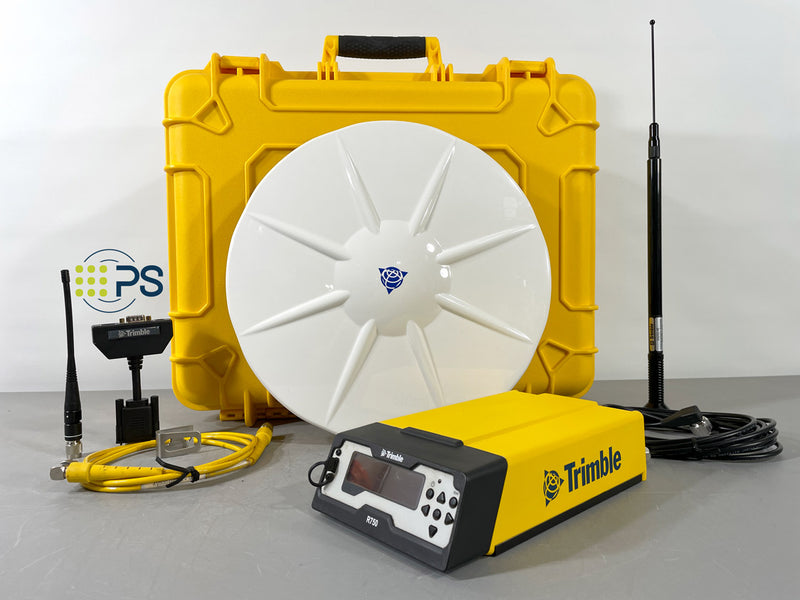
https://positioningsolutions.com/cdn/shop/files/R750-MAIN-2024_800x.jpg?v=1734546429

Global Navigation Satellite Systems (GNSS), including GPS, are foundational to geodesy. Processing raw satellite observations into precise position estimates requires high-precision software.

One of the most widely used packages is GAMIT/GLOBK, developed at MIT. It processes GNSS observations to estimate station positions, velocities, and atmospheric delays. Similarly, Bernese GNSS Software—developed at the University of Bern—is known for its rigorous modeling capabilities and is widely used in global reference frame studies.

Another popular platform is GIPSY-X, created by NASA’s Jet Propulsion Laboratory. It is optimized for precise point positioning (PPP) and high-accuracy orbit determination.

These tools allow researchers to detect millimeter-scale crustal movements—critical for studying earthquakes, glacier rebound, and tectonic deformation.


InSAR and Remote Sensing Analysis

Interferometric Synthetic Aperture Radar (InSAR) measures ground deformation from space. Processing radar phase data requires advanced signal analysis software.

The European Space Agency provides SNAP, a widely used open-source toolbox for Sentinel satellite data processing. SNAP enables researchers to generate interferograms and displacement maps from radar images.

For more automated and scalable processing, researchers use ISCE, developed by NASA’s Jet Propulsion Laboratory. ISCE supports large-scale deformation analysis, often used in volcano and earthquake research.


Gravity Field Modeling


Understanding Earth’s gravity field is central to geodesy. Satellite missions like GRACE and GRACE-FO generate gravity measurements that require advanced numerical modeling.

Software such as ICGEM provides tools and models for gravity field analysis. Researchers often combine these tools with MATLAB or Python-based workflows to compute geoid heights, mass redistribution, and ice sheet mass loss.


Scientific Computing and Data Analysis

Beyond specialized geodetic packages, much of modern research depends on general scientific computing tools.

MATLAB has long been a staple in geodesy for matrix computations and modeling. However, Python has become increasingly dominant due to its open-source ecosystem. Libraries such as NumPy, SciPy, and PyGMT enable data visualization, numerical modeling, and geospatial analysis.

For large datasets, researchers frequently use PostgreSQL with PostGIS for spatial database management, allowing efficient querying of geodetic time series and coordinate data.


The Future: Automation and AI Integration

As satellite constellations expand and data volumes grow exponentially, geodetic research is shifting toward automation and cloud-based processing. Machine learning frameworks are beginning to assist with deformation pattern recognition and anomaly detection.

Modern geodesy is no longer just about measurements—it is about computational precision. Software is the digital backbone that transforms raw satellite signals into insights about tectonic motion, glacier retreat, sea-level rise, and Earth system change. Without these tools, millimeter-level Earth science would remain out of reach.

How Humidity Impacts Glaciers

When most people think about glaciers shrinking, they immediately picture rising temperatures. While temperature is a major factor, humidity—the amount of water vapor in the air—plays a powerful and often overlooked role in glacier health. In many ways, humidity acts as an invisible climate driver, influencing how quickly glaciers melt, grow, or stabilize.

Humidity and Energy Transfer

Glaciers respond to their energy balance—the amount of energy they gain versus lose. Humidity affects this balance through something called latent heat flux. When moist air comes into contact with a glacier’s surface, condensation can occur. This process releases heat, transferring energy directly to the ice and accelerating melting.

On the other hand, in very dry conditions, sublimation can dominate. Sublimation occurs when ice turns directly into water vapor without melting first. While sublimation removes mass from the glacier, it also requires energy, which can cool the surface. In some cold, dry regions—like parts of Antarctica—this process can slightly slow surface warming compared to humid environments.

The Role of Clouds and Atmospheric Moisture

Higher humidity is often associated with increased cloud formation. Clouds affect glaciers in two competing ways:

  • Daytime cooling: Clouds reflect incoming solar radiation, reducing the amount of sunlight reaching the ice surface.

  • Nighttime warming: Clouds trap outgoing longwave radiation, acting like a blanket and keeping temperatures warmer.

In many glacierized mountain regions, increased atmospheric moisture results in warmer nighttime conditions, reducing refreezing and enhancing overall melt rates.

Humidity and Snowfall

Humidity also influences glaciers indirectly through precipitation patterns. Warmer, moisture-rich air masses can carry more water vapor. In colder regions, this can lead to increased snowfall, potentially adding mass to glaciers. However, if temperatures hover near freezing, that same moisture may fall as rain instead of snow—accelerating melting and reducing long-term accumulation.

This transition from snow to rain is particularly critical in alpine regions like the Alps or parts of Alaska, where small temperature changes determine whether glaciers gain or lose mass during winter storms.

Surface Conditions and Melt Rates

Moist air affects more than just temperature. High humidity reduces evaporative cooling at the glacier surface. In dry air, evaporation and sublimation remove heat, helping slow melt. But when the air is already saturated with moisture, this cooling effect weakens, allowing melting to proceed more efficiently.

Additionally, humid conditions can promote the formation of surface meltwater. Meltwater lowers the albedo (reflectivity) of glacier ice, meaning more solar energy is absorbed rather than reflected. This creates a feedback loop: darker surfaces absorb more heat, which produces more meltwater.

A Changing Climate, A Moistening Atmosphere

As global temperatures rise, the atmosphere holds more water vapor. For every 1°C increase in temperature, the air can hold about 7% more moisture. This means many glacierized regions are not just getting warmer—they are also getting more humid.

The combined effect of warming and increasing atmospheric moisture intensifies glacier melt in many regions. Humidity amplifies the warming signal through enhanced longwave radiation, reduced surface cooling, and changes in precipitation type.